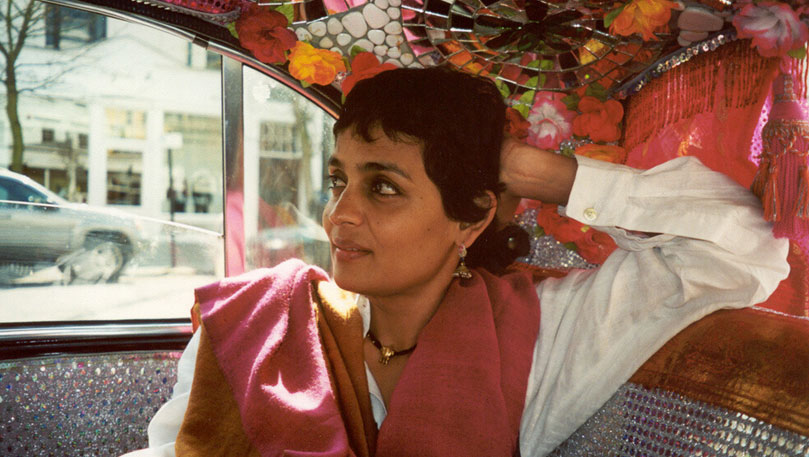
The documentary Dam/age portrays the Narmada Bachao Andolan (NBA), a grassroots movement opposing the construction of large dams in India’s Narmada Valley. The goal of the movement was to halt or delay projects that threatened to displace millions of marginalized people while reframing “development” as a site of injustice. Arundhati Roy’s narration adds another layer: questioning not only the dams but also the legitimacy of the Indian Supreme Court and international institutions like the World Bank.
The NBA’s strategies reflect what Nepstad (2015) calls both principled and pragmatic nonviolence. On one hand, Gandhian traditions of satyagraha informed hunger strikes, marches, and standing in rising waters. On the other hand, pragmatic calculations guided legal petitions, media outreach, and international solidarity, reflecting Sharp’s (1973) idea of targeting a regime’s “pillars of support.” For example, the World Bank withdrew funding under pressure, weakening elite consensus behind the dam projects.
The film highlights tactics of both obstructive and constructive non-violence. Obstructive tactics included blockades, sit-ins, and the physical refusal to vacate villages as waters rose. Constructive tactics included building alliances across rural and urban spaces, linking villagers with activists, lawyers, and international NGOs. Roy’s writing functions as what Nepstad (2015) would call a symbolic action, reshaping the narrative of what counts as violence: deprivation of land and livelihood is framed as structural violence, even if no bullets are fired.
The effectiveness of these actions was mixed. The NBA delayed dam projects for years and secured temporary stays in court, demonstrating what Nepstad terms accommodation, i.e. concessions without full regime conversion. Yet the dams were ultimately completed, underscoring Chenoweth & Stephan’s (2011) finding that nonviolent campaigns succeed most when they mobilize sustained, mass participation across society. The NBA succeeded in exposing injustice but struggled to translate moral legitimacy into structural change.
As a teaching tool, Dam/age is invaluable. It broadens the conversation beyond regime change to show how nonviolence confronts structural violence tied to development and globalization. By connecting Sharp’s (1973) “pillars of support” and Nepstad’s (2015) mechanisms of change to a Global South case, the film shows students that nonviolence is not only about elections or independence struggles, but also about resisting economic injustice through creative, nonviolent means.
References
Chenoweth, E., & Stephan, M. J. (2011). Why Civil Resistance Works: The Strategic Logic of Nonviolent Conflict. Columbia University Press.
Nepstad, S. E. (2015). Nonviolent Struggle: Theories, Strategies, and Dynamics. Oxford University Press.
Sharp, G. (1973). The politics of nonviolent action. Boston : P. Sargent Publisher.